
25 Oct Commercial Conversions vs Newbuilds
October 25 2022
Commercial Conversions or New-build Developments
Where should you invest your money?
340,000 new houses a year until 2023. This is what the government needs to build to keep up with the growing demand of the UK population.
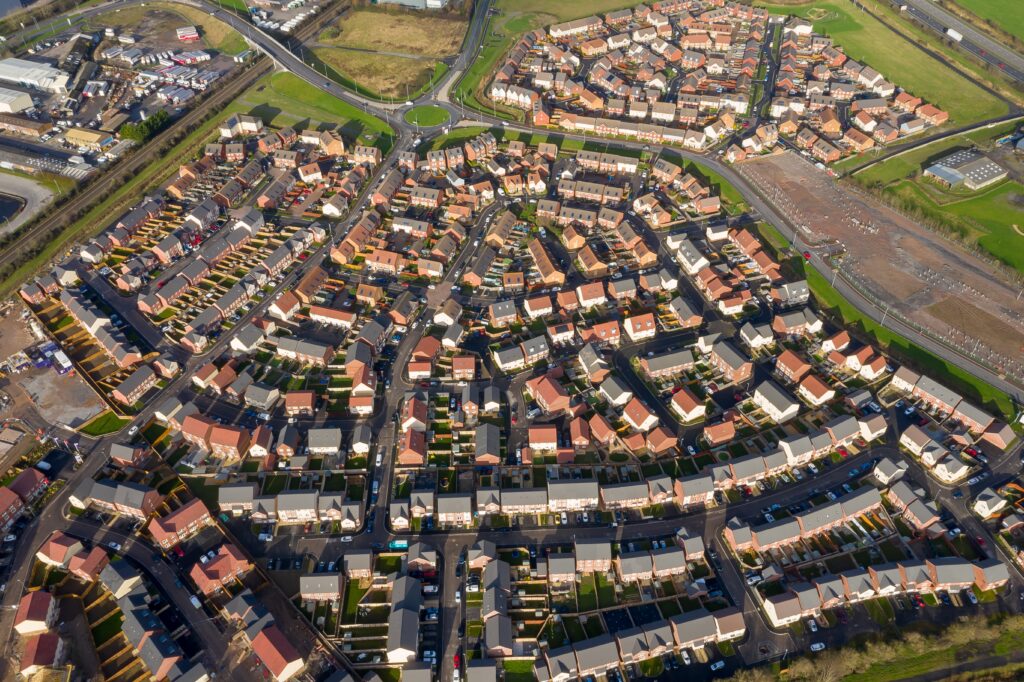
We are currently in a housing crisis with too many people and not enough homes. Although this sounds daunting, it means that now is the perfect opportunity to invest in property developments.
But which strategy do you use? Do you go down the avenue of repurposing old buildings (also known as converting commercial units), or do you build new homes from the ground up? There are many advantages to both strategies, advantages that we are going to explore in this article.

The primary benefit of the commercial conversion strategy is that it is typically easier to get planning. If an old building is going to ruin, then the planning authority would prefer for it to be fixed up and lived in. In some instances, you can convert commercial units into residential properties without planning under class MA.
Repurposing existing buildings is also better for the environment. You use less carbon when you’re not building from the ground up, and it also means that you’re not destroying green space. Planning officials will take this into account, especially with the introduction of The Future Homes Standard in 2025.
Finally, there are plenty of opportunities for commercial conversions. Covid crippled a lot of businesses. This has caused an increase in vacant pubs, shops, offices, and other commercial units. These ex-business owners or landlords are potentially out of pocket and in the market for a creative deal, like a joint venture or a lease option, that will get them out of hot water.

There are just as many benefits to building properties from the ground up as there are from repurposing existing ones. For example, it is easier to find land deals. All you need to do is drive around rural areas, find empty plots of brown or greenfield land, search for these plots on Land Registry, and find the owner.
This brings us to our second point: it is easier to go direct to vendor (DTV) with land deals. Sometimes a vacant plot is directly next to the owner’s house. Sometimes the plot might be a large garden. In this instance, going DTV would be as simple as knocking on their door. If they’re not using the empty land that they own, then they might as well make money selling or developing it. Speaking directly with landowners opens the door to creative deals.
On the topic of being creative, this brings us to our third point. When you’re building from the ground up, you are working from a clean slate. Other than planning regulations, you are not limited to what you can build.
If you want to build bungalows instead of houses, then you can. If you want to build a block of apartments or a handful of high-end luxury homes, then the choice is yours. You can be flexible to increase your chance of gaining planning permission and build desirable homes that will maximise your profits.

We know the pros and cons of both strategies because we actively use both. We find profitable deals on and off-market that profit our investors and answer the UK’s cry for housing. You can get involved in these deals and reap a healthy return on investment by booking a free consultation with us here.
There is no hard sell involved, and if you want your questions answered by an experienced team with years of experience in the industry, then our consultation call is exactly what you need.